
SEARCH WHAT YOU WANT
News
Understanding Corrugated Flutes: How Structure Impacts Strength, Cost, and Print Quality

Why do some boxes perform better than others, even when they look the same?
The answer often lies inside — in the flute structure. Studies show up to 60% of a box’s compression strength comes from flute design, not just linerboard.
Flute Function: How It Works
Flutes act like miniature arches, giving corrugated boxes the ability to:
- Absorb vertical pressure during stacking
- Cushion products from shock and vibration
- Maintain rigidity while keeping weight low
Tip: Minor changes in flute structure can improve compression performance by 10–20% without increasing box size or paper grade.

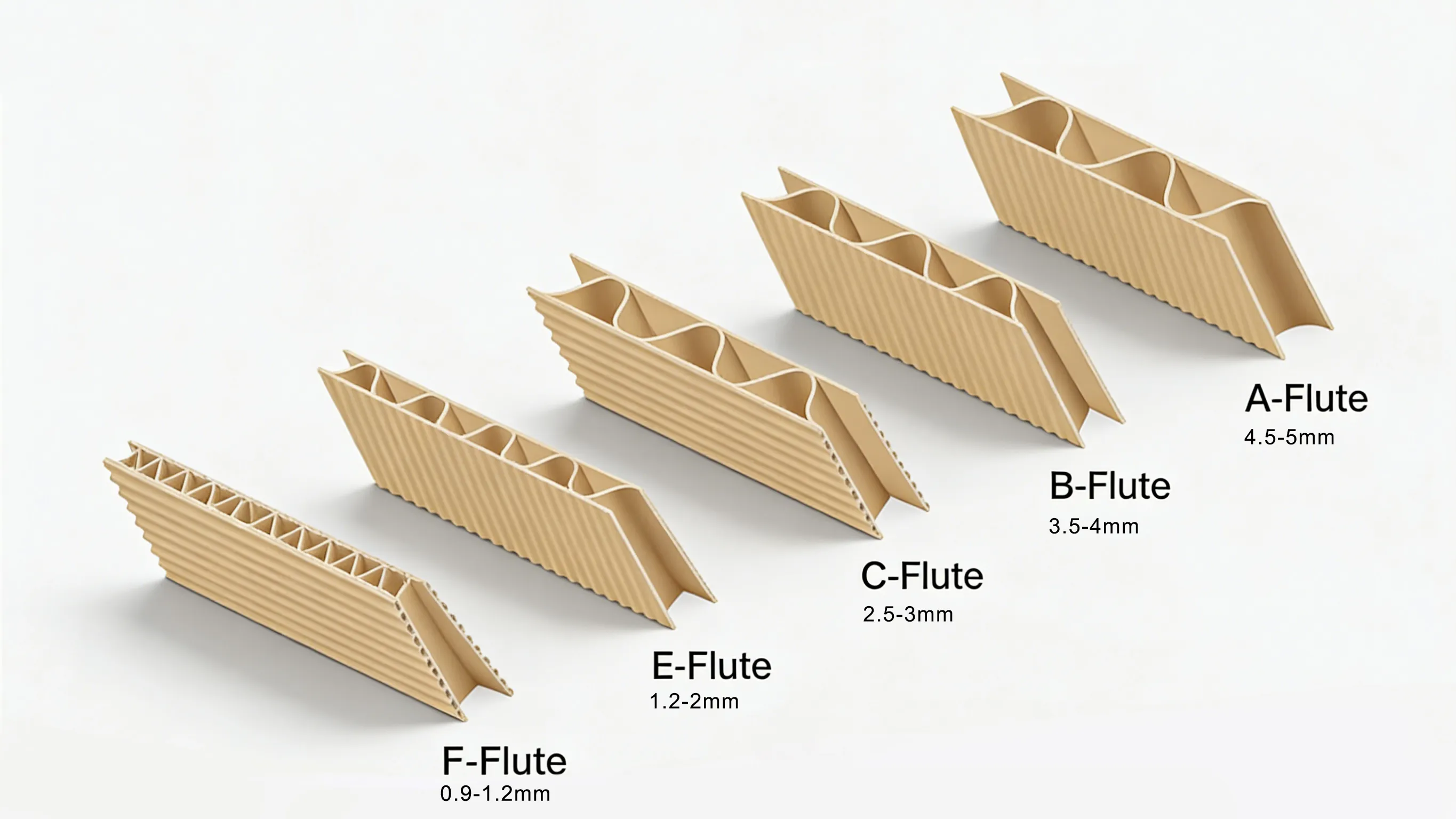
Common Flute Types
| Flute Type | Thickness | Key Trait | Typical Use |
|---|---|---|---|
| A / C | Thick | Cushioning & stacking | Fragile / heavy products |
| B | Medium | Crush resistance | Retail inserts |
| E / F | Fine | Smooth printing | E-commerce / premium packaging |
C-flute is the most widely used globally because it balances protection and material efficiency.
Performance Trade-Offs
Cushioning vs Space Efficiency
- Thick flutes (A, C) → better shock absorption, higher internal height, slightly higher shipping volume
- Fine flutes (E, F) → reduced box thickness, better pallet utilization
- Switching from C to E-flute can reduce box thickness up to 40%
Print Quality & Brand Presentation
- Coarse (A, C) → visible flute lines under heavy print
- Fine (E, F) → cleaner graphics & sharper text, ideal for retail-ready boxes
Tip: Combined flutes often outperform thicker paper alone, while keeping cost in check.
Choosing the Right Flute
Start with your product’s weight, fragility, stacking height, shipping distance, and branding requirements. Then select a flute type to balance protection, efficiency, and appearance.
| Priority | Recommended Flutes |
|---|---|
| Maximum protection | A, C, Double Wall |
| Cost efficiency | B, C |
| Premium appearance | E, F |
| Compact shipping | E, F |
Tip: The right flute selection reduces damage, shipping costs, and improves customer perception.
Wrapping Up & Next Step
Flutes may be invisible to customers, but they determine strength, efficiency, and brand impact. Align flute type with product, shipping, and visual goals for smarter, cost-effective packaging.
Ready to explore which flute and board combination works best for your products? Contact our packaging experts today to get personalized recommendations or request samples.
Why do some boxes perform better than others, even when they look the same?
The answer often lies inside — in the flute structure. Studies show up to 60% of a box’s compression strength comes from flute design, not just linerboard.
Flute Function: How It Works
Flutes act like miniature arches, giving corrugated boxes the ability to:
- Absorb vertical pressure during stacking
- Cushion products from shock and vibration
- Maintain rigidity while keeping weight low
Tip: Minor changes in flute structure can improve compression performance by 10–20% without increasing box size or paper grade.
Common Flute Types
| Flute Type | Thickness | Key Trait | Typical Use |
|---|---|---|---|
| A / C | Thick | Cushioning & stacking | Fragile / heavy products |
| B | Medium | Crush resistance | Retail inserts |
| E / F | Fine | Smooth printing | E-commerce / premium packaging |
C-flute is the most widely used globally because it balances protection and material efficiency.
Performance Trade-Offs
Cushioning vs Space Efficiency
- Thick flutes (A, C) → better shock absorption, higher internal height, slightly higher shipping volume
- Fine flutes (E, F) → reduced box thickness, better pallet utilization
- Switching from C to E-flute can reduce box thickness up to 40%
Print Quality & Brand Presentation
- Coarse (A, C) → visible flute lines under heavy print
- Fine (E, F) → cleaner graphics & sharper text, ideal for retail-ready boxes
Tip: Combined flutes often outperform thicker paper alone, while keeping cost in check.
Choosing the Right Flute
Start with your product’s weight, fragility, stacking height, shipping distance, and branding requirements. Then select a flute type to balance protection, efficiency, and appearance.
| Priority | Recommended Flutes |
|---|---|
| Maximum protection | A, C, Double Wall |
| Cost efficiency | B, C |
| Premium appearance | E, F |
| Compact shipping | E, F |
Tip: The right flute selection reduces damage, shipping costs, and improves customer perception.
Wrapping Up & Next Step
Flutes may be invisible to customers, but they determine strength, efficiency, and brand impact. Align flute type with product, shipping, and visual goals for smarter, cost-effective packaging.
Ready to explore which flute and board combination works best for your products? Contact our packaging experts today to get personalized recommendations or request samples.
>> NEXT:No more

Navigation
Home
Products
Resources
About Us
Contact Us
Customize
Paper Box
Paper Bag
Paper Tube
Inserts
Stickers
Copyright © 2025 Shanghai Forests Packaging Group Co., Ltd. All Rights Reserved.